
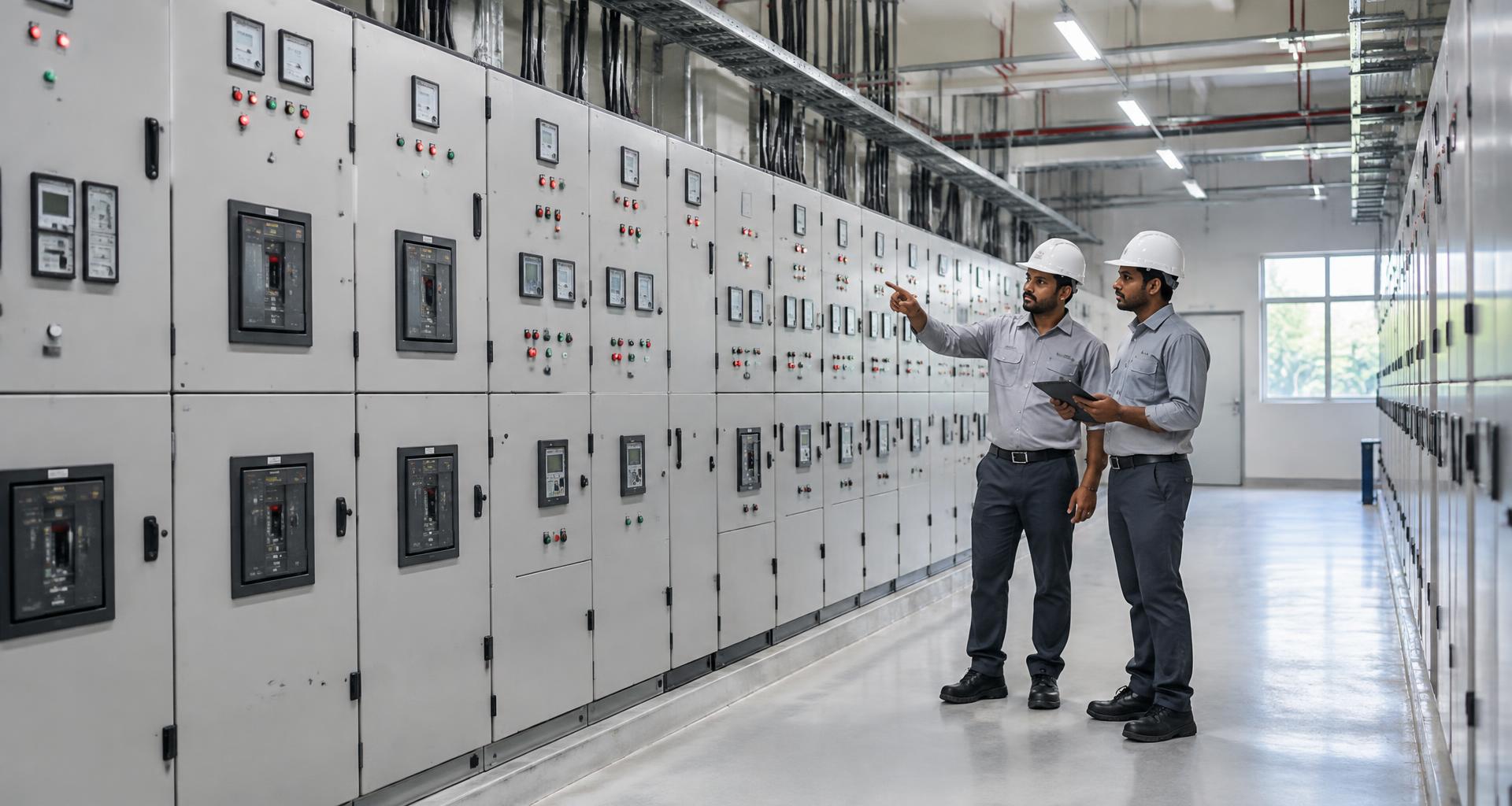
Transitioning Your Facility Management Vendor: The 60-Day Handover Checklist
A comprehensive operational framework for commercial property directors executing facility management vendor transitions, asset audits, statutory transfers, and SLA onboarding in Bengaluru.

Transitioning facility management vendors in commercial properties requires a disciplined 60-day phased roadmap: Day 1–15 for contract alignment and asset discovery, Day 16–30 for electro-mechanical gap audits, Day 31–45 for parallel shadowing and manpower onboarding, and Day 46–60 for operational cutover. JTechno Associates executes seamless facility transitions with zero operational disruptions across Karnataka.
Key Engineering Highlights
- A structured 60-day transition roadmap eliminates operational downtime, asset data loss, and vendor friction during facility takeovers.
- Comprehensive baseline asset condition audits prevent incoming vendors from inheriting unrecorded mechanical liabilities or safety violations.
- Parallel shadowing between incumbent and incoming engineering teams ensures critical building nuances and hidden defect histories are transferred.
- Verifying statutory labor clearances (EPF/ESIC non-liability proofs) and CEIG/fire licenses protects the client from regulatory penalties.
- Standardizing on digital asset tagging (QR/RFID) during the transition establishes reliable CMMS baseline data for predictive maintenance.
The Critical Challenge of Facility Vendor Transitions in Commercial Real Estate
Switching facility management (FM) service providers is one of the most operationally delicate undertakings a commercial building owner, asset manager, or corporate real estate head can execute. Whether driven by unsatisfactory service quality, unresolved statutory non-compliance, escalating costs, or a strategic vendor consolidation initiative, changing service providers introduces substantial operational risk.
In large commercial campuses across Bengaluru—such as sprawling tech parks in Bellandur, high-rise corporate towers in the CBD, or industrial manufacturing plants in Peenya—the facility vendor controls live high-tension substations, complex central chiller plants, critical life-safety systems, and 24/7 building management automation. A poorly planned transition leads to lost maintenance records, undetected equipment damage, vendor sabotage, tenant dissatisfaction, and catastrophic outages during the handover cutover.
Phase 1 (Days 1–15): Strategic Governance, Kickoff & Asset Register Discovery
The first two weeks establish the governance framework for the transition. The facility management leadership must establish a Joint Transition Committee comprising the client's facility director, the incoming FM transition manager, and a designated representative from the incumbent service provider. Clear escalation matrices, non-disclosure agreements, and operational access clearances must be ratified immediately.
The primary technical priority during Phase 1 is asset register validation. In many legacy commercial properties, physical equipment registers are outdated, incomplete, or corrupted by years of undocumented fit-out modifications. The incoming engineering team must perform a comprehensive physical walkthrough to locate, catalog, and digitally tag every electro-mechanical asset—from primary 11kV transformers down to small drainage sump submersible pumps.
- Establish Joint Transition Committee and execute weekly governance progress reviews.
- Compile full equipment registers including OEM nameplates, serial numbers, and installed capacities.
- Audit existing operation manuals, as-built CAD drawings, and electrical single-line diagrams (SLD).
- Review historical equipment logbooks, vendor AMC contracts, and historical breakdown logs.
- Establish baseline stock inventory for on-site consumable spares, specialized tools, and emergency PPE.
Phase 2 (Days 16–30): Technical Gap Audits, Health Surveys & Statutory Verifications
Weeks 3 and 4 focus on rigorous physical and statutory condition assessments. The incoming technical team must not simply accept the incumbent's word regarding equipment health; they must perform comprehensive condition-based diagnostics. This involves non-destructive testing: infrared thermography of electrical busducts and LT panels, vibration analysis of central chiller compressor bearings, transformer oil breakdown voltage (BDV) tests, and water quality testing of chilled water loops and cooling tower basins.
Concurrently, a rigorous statutory compliance audit must be executed. The incoming team verifies the validity of all government permits and inspection approvals: Karnataka Electrical Inspectorate (CEIG) approvals, Karnataka State Fire and Emergency Services NOCs, Karnataka State Pollution Control Board (KSPCB) consents for STP operations and DG emissions, and factory inspectorate lift certifications. Any pre-existing statutory lapses or equipment defects must be formally cataloged in a 'Pre-Existing Defects Liability Register' signed by all parties to insulate the client from future vendor disputes.
Phase 3 (Days 31–45): Manpower Mobilization, Parallel Shadowing & SOP Calibration
Technical personnel mobilization occurs during Phase 3. The incoming service provider deploys qualified, pre-vetted engineering supervisors, licensed wiremen, chiller operators, and BMS technicians. If existing qualified personnel from the incumbent team are being absorbed, rigorous technical evaluations and background checks must be completed before re-badging.
A crucial element of this phase is the 14-day Parallel Shadowing protocol. During this period, the incoming engineering crew shadows the incumbent team during daily operational rounds, maintenance activities, and shift handovers. This hands-on shadowing allows incoming technicians to uncover site-specific operational quirks that never appear in official manuals: valves that stick, chillers prone to surging under low load, or specific utility transfer sequences required during BESCOM grid dips.
Phase 4 (Days 46–60): Cutover Readiness, System Cutover & Day-1 Operational Stabilization
The final two weeks lead to the midnight operational cutover. On-site technical teams complete emergency drill simulations, verifying that every incoming engineer knows the precise physical location of emergency utility isolation valves, electrical main breakers, and fire alarm acknowledge panels. Digital CMMS software platforms are populated with verified asset data, scheduled maintenance calendars, and dynamic QR-code inspection routes.
On Day 60, at precisely 00:00 hours, the formal operational handover takes place. Incumbent personnel vacate the premises, incoming engineering teams assume complete custody of the facility control rooms, and a joint handover protocol is signed. JTechno Associates provides extended 'Day-1 through Day-30' stabilization support, deploying roving technical specialists to ensure complete operational continuity and rapid resolution of tenant requests.
| Transition Phase | Timeline | Core Engineering Deliverables | Exit Governance Gate |
|---|---|---|---|
| Phase 1: Initiation & Discovery | Days 1 to 15 | Asset register audit, SLD review, spare inventory, kickoff meeting | Joint Transition charter signed by all stakeholders |
| Phase 2: Technical Gap Audit | Days 16 to 30 | Thermography, vibration baseline, water tests, statutory audit | Defects Liability Register ratified; statutory gaps noted |
| Phase 3: Manpower & Shadowing | Days 31 to 45 | Staff mobilization, background vetting, 14-day parallel shadowing | SOP calibration complete; staff certified on site assets |
| Phase 4: Cutover & Go-Live | Days 46 to 60 | CMMS launch, emergency drills, key inventory handover, midnight cutover | Operational handover protocol executed; full custody assumed |
| Post-Cutover: Stabilization | Days 61 to 90 | First 30-day performance review, SLA baseline, client satisfaction survey | Transition closure report and stabilization sign-off |
Frequently Asked Technical Questions
Why is a Pre-Existing Defects Liability Register vital during an FM transition?
The register documents all equipment malfunctions, thermal anomalies, deferred maintenance items, and statutory lapses present before the new vendor takes over. This prevents the client from unfairly holding the incoming vendor accountable for pre-existing equipment damage.
How long should the parallel shadowing period last between outgoing and incoming vendors?
An effective parallel shadowing period should last between 10 to 14 operational days. This ensures incoming engineering teams experience full weekly operational cycles, weekend maintenance routines, and multiple shift handovers alongside incumbent staff.
What statutory labor documents must be verified when re-badging incumbent technicians?
The client must verify that the outgoing vendor provides formal clearance proofs: EPF transfer clearances, ESIC non-liability documentation, full and final settlement receipts, and proof that no statutory wage or bonus disputes are pending.
How are facility access control keys, master passwords, and software licenses transitioned?
A formal Key and Credential Transfer Protocol is executed under joint witness. All physical master keys, BMS admin credentials, fire alarm programming dongles, and CCTV console passwords are reset and cataloged within a secure vault register.
What is the role of CMMS software during a facility handover?
A Computerized Maintenance Management System (CMMS) centralizes asset tagging, standard operating procedures, maintenance calendars, and ticketing workflows, ensuring zero loss of operational history during the transition from the old vendor.
Related Critical Facility Management Services
Integrated Facility Management (IFM)
Comprehensive technical management, SLA governance, and structured vendor transition services.
Technical Manpower & Staffing
Certified engineering teams, licensed wiremen, and rapid mobilization for commercial campuses.
Building Management System Automation
Smart building automation auditing, DDC controller calibration, and baseline efficiency tuning.
Electrical Substation O&M Services
High-voltage asset condition surveys, CEIG statutory compliance, and transition audits.
Engineering standards and operational procedures referenced herein comply with Central Electricity Authority (CEA), CEIG Karnataka, Central Pollution Control Board (CPCB), ASHRAE, and National Building Code (NBC 2016) specifications. Facility assessments by JTechno Associates determine site-specific maintenance scopes for commercial properties across Karnataka.
Ready for zero-surprise uptime?
Start with a conversation. We’ll take it from there.