
Integrated Facility Management (IFM) Services: The Corporate Engineering Guide
Strategic corporate engineering guide to integrated facility management (IFM), hard services consolidation, 24/7 helpdesk workflows, and vendor governance in Bengaluru.

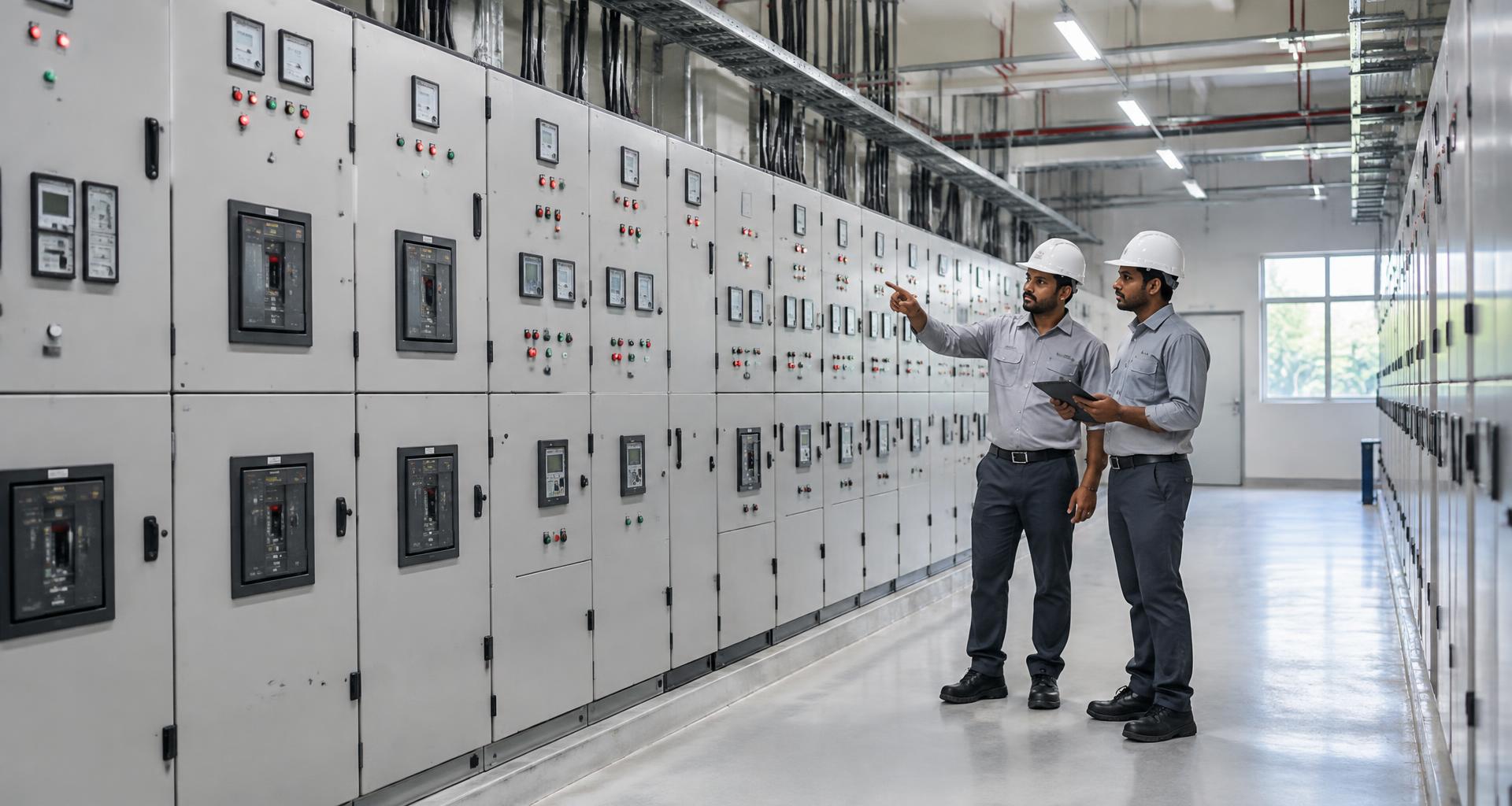
Integrated Facility Management (IFM) unifies electro-mechanical hard services, HVAC operations, power infrastructure, life-safety compliance, and vendor management under a single accountable engineering service provider. JTechno Associates manages 100+ corporate and tech facilities across Karnataka with 850+ trained personnel, delivering measurable OPEX reductions and 99.98% operational uptime.
Key Engineering Highlights
- Hard engineering services (substations, chillers, generators, BMS) protect high-value capital assets, whereas soft services focus on workplace hygiene and environment.
- Consolidating multiple standalone maintenance vendors into a single IFM partner eliminates vendor finger-pointing and cuts administrative overhead by 14% to 22%.
- Modern SLA architecture ties vendor compensation to quantitative metrics: MTBF, MTTR, energy intensity index, and preventive maintenance completion rates.
- A centralized 24/7/365 Computerized Maintenance Management System (CMMS/CAFM) guarantees transparency across work orders, asset life histories, and spare inventories.
- Strict statutory audit frameworks ensure complete compliance with Karnataka Labor Laws, CEIG electrical clearances, KSPCB environmental norms, and Fire NOC renewals.
The Strategic Shift from Multi-Vendor Fragmentation to Integrated Hard Services
Corporate real estate heads, enterprise facility directors, and asset managers across Bengaluru's high-density business districts—such as the Outer Ring Road (ORR), Whitefield, and Electronic City—face increasing pressure to balance escalating operating costs with non-negotiable facility uptime requirements. Traditionally, commercial properties contracted individual third-party vendors for each technical trade: one vendor for HT substations, another for diesel generators, a separate contractor for HVAC chillers, and yet another for plumbing and STP operations.
This fragmented multi-vendor model inevitably results in operational friction. When a power disruption or chiller plant trip occurs, vendors frequently deflect responsibility—the chiller contractor blames the electrical team for voltage instability, while the electrical team points to compressor motor over-amping. Integrated Facility Management (IFM) replaces this fragmented model with single-source engineering accountability, where one qualified partner owns end-to-end performance across the entire electro-mechanical and utility ecosystem.
Defining Hard Engineering Services vs. Soft Facility Services
A clear understanding of facility operations requires distinguishing between 'Hard Services' and 'Soft Services.' Hard Services encompass the physical, electro-mechanical, and structural assets directly integrated into the building fabric. These systems require licensed engineering competencies, statutory compliance certifications, and deep technical diagnostics. Examples include 11kV/33kV substations, standby diesel generators, central chiller plants, commercial UPS topologies, fire hydrants, clean-agent suppression systems, and sewage treatment plants.
Soft Services, by contrast, focus on workplace hygiene, occupant comfort, and administrative functions—such as general housekeeping, landscaping, pantry management, and pest control. While soft services impact daily employee perception, failures in hard engineering services carry catastrophic financial, safety, and legal consequences. JTechno Associates specializes in technical hard services engineering, ensuring critical facility infrastructure operates with unwavering reliability.
The 24/7/365 Central Engineering Helpdesk Architecture & Incident Escalation
Enterprise commercial operations demand round-the-clock technical monitoring supported by clear incident management workflows. JTechno Associates deploys structured 24/7/365 on-site technical teams structured across three rotating 8-hour shifts, backed by an escalation matrix spanning on-site supervisors, traveling technical specialists, and corporate engineering leadership.
Every service request, preventive maintenance routine, and corrective alarm is managed through a Computerized Maintenance Management System (CMMS / CAFM). Critical operational alarms (such as a UPS on battery, chiller high head pressure, or fire panel fault) trigger automated high-priority tickets. The on-site team operates under strict SLA response thresholds: Category 1 critical incidents require on-site response within 10 minutes and containment within 60 minutes, ensuring minimal disruption to business operations.
- Deploy licensed Class-A electrical supervisors and certified technicians on 24/7/365 rotating shifts.
- Implement Computerized Maintenance Management Software (CMMS) for barcode/QR-based asset tagging.
- Establish multi-tiered incident escalation matrices with defined response and resolution timeframes.
- Conduct monthly joint SLA reviews with corporate facility steering committees.
- Maintain calibrated safety equipment, arc-flash PPE, and emergency spill kits on-site.
KPI and SLA Governance Models: MTBF, MTTR, and Energy Intensity Benchmarks
Modern corporate facility contracts link service compensation directly to quantitative Key Performance Indicators (KPIs) and Service Level Agreements (SLAs). Meaningful governance relies on clear mathematical reliability metrics rather than subjective satisfaction surveys.
Critical KPIs include: Mean Time Between Failures (MTBF) tracking system reliability; Mean Time to Repair (MTTR) measuring technician diagnostic and replacement speed; Planned Maintenance Percentage (PMP)—targeting > 85% planned preventive maintenance vs. < 15% reactive repairs; and Energy Utilization Index (EUI in kWh/sq.ft/year). JTechno Associates provides transparent monthly performance dashboards benchmarked against agreed contract deliverables.
Statutory Compliance Integration: CEIG, KSPCB, Factory Act, and Labor Norms
Operating commercial facilities in Karnataka involves complex statutory requirements spanning electrical safety, environmental protection, and labor regulations. A failure in statutory compliance can result in disconnected utility power, heavy pollution fines, or corporate director liability.
An integrated facility partner manages this complete statutory landscape: coordinating annual CEIG high-tension electrical inspection renewals; managing KSPCB consent-to-operate (CTO) renewals and monthly treated water laboratory testing; maintaining Karnataka State Fire & Emergency Services (KSFES) fire safety certificates; and strictly adhering to the Contract Labour (Regulation and Abolition) Act, ensuring on-time PF, ESIC, and statutory minimum wage disbursements for all deployed engineering staff.
Measuring Financial Return on Integrated Facility Management Consolidation
Consolidating facility operations under a single integrated engineering partner yields substantial, quantifiable financial savings. Direct savings arise from administrative rationalization: managing a single vendor invoice, a single contract renewal cycle, and a single management review eliminates redundant procurement overhead.
More importantly, indirect operational savings are generated through proactive equipment maintenance. Extending the operating life of major capital assets (such as chillers and transformers) from 12 years to 18+ years through condition-based monitoring, combined with a 10% to 18% reduction in overall facility energy consumption, delivers a proven return on investment (ROI) that substantially exceeds the base facility management contract fee.
| Operational Parameter | Fragmented Multi-Vendor Approach | Integrated Engineering IFM Partner (JTechno) |
|---|---|---|
| Vendor Accountability | Divided across 5–8 vendors; frequent finger-pointing | Single point of engineering ownership and responsibility |
| Emergency Response | Dependent on individual vendor dispatch availability | Dedicated on-site 24/7 licensed technicians with < 10m response |
| Statutory Audits | Managed in silos; missed renewals and compliance gaps | Centralized compliance tracker: CEIG, KSPCB, Fire NOC |
| Asset Lifecycle Data | Fragmented paperwork and missing historical logs | Unified CMMS database tracking equipment MTBF and TCO |
| Procurement Overhead | Multiple contract negotiations, POs, and invoicing streams | Single consolidated transparent monthly service billing |
| Energy Management | Uncoordinated operations; zero holistic optimization | Interconnected BMS, chiller, and APFC load tuning |
Frequently Asked Technical Questions
What is the primary difference between hard and soft facility management services?
Hard services pertain to the physical engineering infrastructure and machinery integrated into the building—such as HT substations, chillers, generators, UPS, fire fighting systems, and STPs. Soft services cover non-technical workplace support functions like janitorial cleaning, landscaping, and office hospitality.
How does an integrated facility management partner reduce operational expenses?
An IFM partner reduces OPEX by consolidating vendor management costs, improving equipment energy efficiency through holistic BMS and chiller optimization, reducing downtime through scheduled preventive maintenance, and extending equipment lifespans.
What Key Performance Indicators (KPIs) should be tracked in a facility management contract?
Essential KPIs include Mean Time Between Failures (MTBF), Mean Time to Repair (MTTR), Planned Maintenance Percentage (> 85%), SLA compliance rate, energy utilization intensity (EUI), and zero statutory compliance non-conformities.
How does JTechno Associates ensure statutory labor compliance in Karnataka?
JTechno Associates strictly complies with the Contract Labour (R&A) Act, maintaining digital records of monthly Provident Fund (PF) electronic challans, ESIC contributions, professional tax filings, and timely wage payments complying with Karnataka Minimum Wages revisions.
What qualifications are required for engineering personnel deployed in commercial facilities?
Deployed staff hold technical diplomas or ITI certifications in electrical, mechanical, or air-conditioning engineering. Substation supervisors hold active CEIG Supervisor Competency Certificates (Class-A/B), and fire safety operators maintain recognized industrial safety credentials.
Related Critical Facility Management Services
Electrical Substation Maintenance
Hard engineering operations and CEIG compliance for commercial high-tension substations.
Commercial Chiller Plant O&M
Central HVAC efficiency optimization, cooling tower maintenance, and air balancing.
Commercial Diesel Generator AMC
Standby power synchronization, CPCB IV+ compliance, and multi-megawatt AMF servicing.
Technical Manpower Supply
Deploying licensed, verified engineering technicians and supervisors on 24/7 shift rotations.
Engineering standards and operational procedures referenced herein comply with Central Electricity Authority (CEA), CEIG Karnataka, Central Pollution Control Board (CPCB), ASHRAE, and National Building Code (NBC 2016) specifications. Facility assessments by JTechno Associates determine site-specific maintenance scopes for commercial properties across Karnataka.
Ready for zero-surprise uptime?
Start with a conversation. We’ll take it from there.