
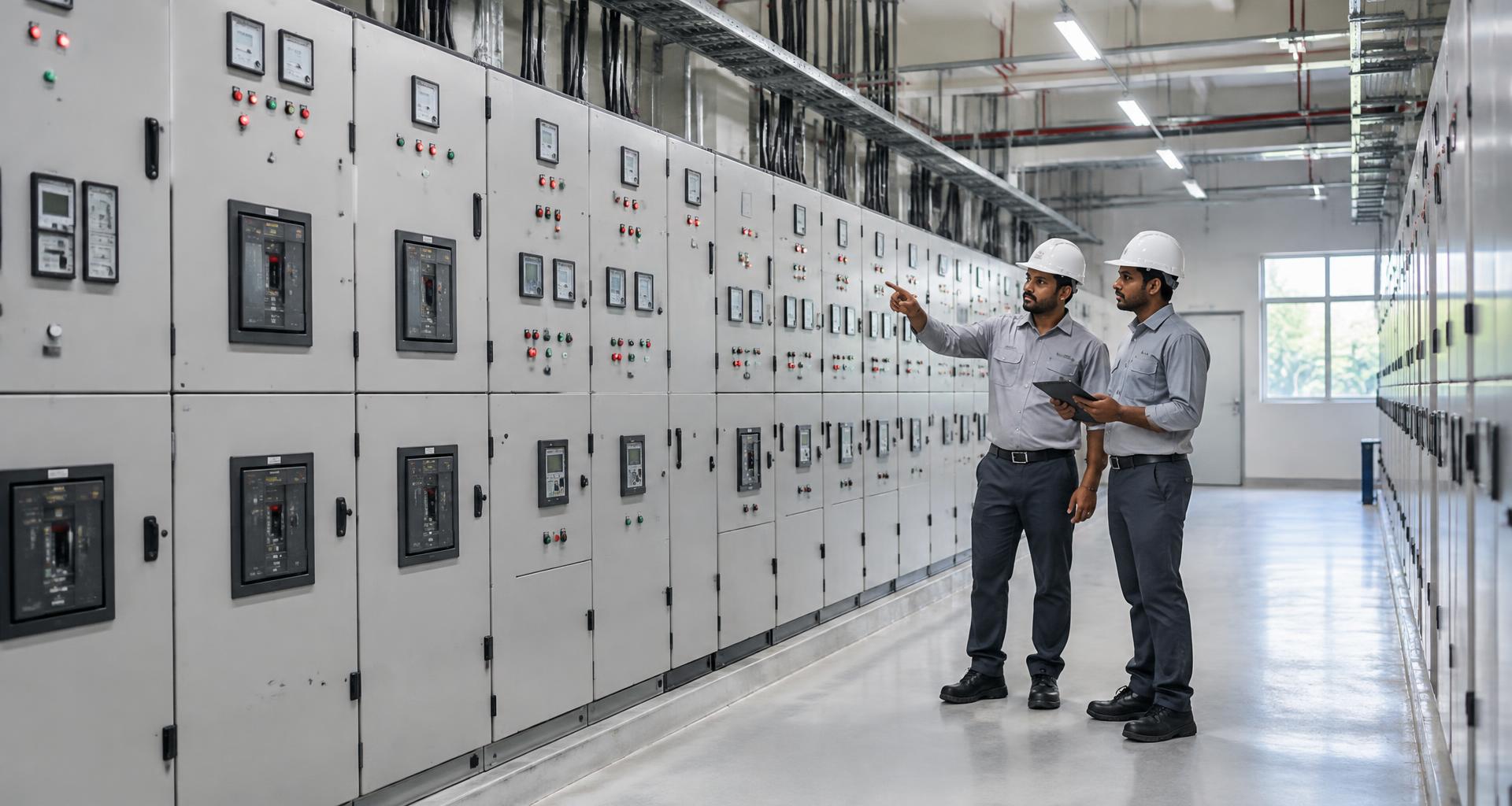
BEE-Accredited Commercial Energy Audit Process: Instruments, Baseline Metrics & Payback Analysis
A step-by-step engineering manual explaining how Bureau of Energy Efficiency (BEE) accredited energy audits identify electrical and thermal waste, optimize HVAC chiller plants, and deliver high-ROI conservation measures for commercial real estate in Bengaluru.

A BEE-accredited commercial energy audit follows a structured four-stage engineering methodology: preliminary data collection, detailed on-site instrumentation monitoring, energy balance modeling, and financial payback analysis. Operating across Bengaluru tech parks, accredited energy auditors analyze electrical distribution losses, chiller COP/IKW efficiency, motor VFD modulation, and power quality harmonics to formulate Energy Conservation Measures (ECMs) that typically reduce commercial utility expenditures by 12% to 28%.
Key Engineering Highlights
- BEE investment-grade energy audits deploy Class-0.2 power analyzers, ultrasonic flowmeters, and thermal cameras to identify non-invasive operational losses.
- Central chiller plants represent 45% to 60% of total commercial power consumption; improving system efficiency from 0.85 to 0.60 kW/TR yields massive operational savings.
- Harmonic distortion and poor power factor create severe I²R copper losses in transformers and distribution busducts.
- VFD retrofits on secondary chilled water pumps and cooling tower fans deliver rapid return on investment with payback periods under 14 months.
- Accredited energy audit reports provide bankable financial metrics including Net Present Value (NPV), Internal Rate of Return (IRR), and Simple Payback Period.
Statutory Energy Conservation Mandates & Commercial Baseline Profiling
Commercial real estate developments, high-density IT parks, and corporate headquarters in Karnataka consume vast amounts of electrical energy. Electricity bills frequently represent the single largest operating expense for commercial asset managers. Under the Energy Conservation Act, large commercial buildings are designated consumers encouraged to achieve high Energy Performance Index (EPI) benchmarks (kWh/m²/year).
A professional energy audit executed by Bureau of Energy Efficiency (BEE) accredited auditors evaluates how efficiently energy is converted into productive work across the facility. The process identifies where utility power is wasted as uncaptured heat, reactive power, or inefficient mechanical cycling.
The Four Phases of an Investment-Grade Energy Audit
An investment-grade energy audit (IGEA) provides rigorous financial and engineering proof suitable for board approval and energy service company (ESCO) financing. The audit encompasses four disciplined stages:
**Phase 1: Historical Data & Energy Balance Modeling**: Gathering 12 to 24 months of BESCOM electricity bills, diesel fuel consumption records, solar PV generation logs, and building occupancy trends to establish baseline specific energy consumption (SEC).
**Phase 2: On-Site Precision Diagnostic Instrumentation**: Deploying non-invasive measuring instruments over 7 to 14 days to capture live operating parameters across high-tension transformers, distribution switchgear, chiller chillers, pumps, and air handling units (AHUs).
**Phase 3: Thermal & Electrical Load Analysis**: Calculating chiller coefficient of performance (COP) and kW/TR ratings, pump hydraulic efficiencies, transformer load losses, and motor loading percentages.
**Phase 4: Techno-Economic Conservation Proposals**: Formulating targeted Energy Conservation Measures (ECMs) categorized into zero-cost operational tweaks, low-cost retrofits, and capital expenditure (CAPEX) upgrades with projected financial returns.
Central HVAC Chiller Plant Energy Optimization
In commercial office parks across Bengaluru, the HVAC chiller plant consumes between 45% and 60% of total electrical energy. Optimizing chiller plant efficiency represents the single largest financial saving opportunity.
Accredited auditors calculate specific power consumption (kW/TR) by cross-referencing instantaneous electrical power input (kW) against actual thermal refrigeration tonnage (TR = GPM × ΔT / 24). A healthy centrifugal chiller operating in Bengaluru's climate should achieve an integrated part-load value (IPLV) between 0.54 and 0.62 kW/TR. Condenser tube scale deposits just 0.6 mm thick increase compressor power consumption by 9.5%, while low return water delta-T forces extra chillers to run under wasteful part-load conditions.
Techno-Economic Payback & Financial Feasibility Modeling
Every recommended ECM in an accredited energy audit report includes detailed financial metrics: initial capital investment (Capex), annual energy cost savings, simple payback period (SPP), Net Present Value (NPV), and Internal Rate of Return (IRR).
Common high-yield interventions include installing variable frequency drives (VFDs) on secondary chilled water pumps (payback 8 to 14 months), deploying automated condenser tube cleaning systems (payback 12 to 18 months), retrofitting smart lighting controls with occupancy sensors (payback 6 to 10 months), and upgrading legacy induction motors to IE4 super-premium efficiency models (payback 18 to 24 months).
Frequently Asked Technical Questions
How long does a commercial energy audit take in Bengaluru?
On-site data logging and instrument monitoring typically take 5 to 10 business days depending on campus size. Data analysis and the final accredited audit report are delivered within 2 to 3 weeks.
What is an acceptable chiller plant efficiency benchmark?
Modern water-cooled centrifugal and screw chillers should operate between 0.55 and 0.65 kW/TR at peak load. Older or poorly maintained chillers operating above 0.85 kW/TR indicate significant energy conservation potential.
Does an energy audit disrupt active commercial operations?
No. BEE-accredited audits utilize non-invasive, clamp-on diagnostic equipment (portable ultrasonic flowmeters and magnetic-mount power analyzers) that monitor performance without interrupting utility power or tenant operations.
Are energy audit recommendations mandatory to implement?
Implementation of specific ECMs is at the building owner's discretion. Facility directors typically prioritize low-cost and quick-payback measures first, funding larger capital retrofits out of verified operational energy savings.
Engineering standards and operational procedures referenced herein comply with Central Electricity Authority (CEA), CEIG Karnataka, Central Pollution Control Board (CPCB), ASHRAE, and National Building Code (NBC 2016) specifications. Facility assessments by JTechno Associates determine site-specific maintenance scopes for commercial properties across Karnataka.
Ready for zero-surprise uptime?
Start with a conversation. We’ll take it from there.