Obtaining CEIG Electrical Safety Approval in Karnataka: Step-by-Step Inspection & Compliance Guide
A complete statutory compliance roadmap for commercial building owners, tech park developers, and facility directors navigating initial approvals and annual safety renewals from the Chief Electrical Inspector to Government (CEIG) in Karnataka.

Obtaining an electrical safety inspection certificate from the Chief Electrical Inspector to Government (CEIG) in Karnataka requires submitting detailed single-line diagrams, transformer test reports, protection relay calibration certificates, and earth resistance logs under CEA Regulations. Commercial HT consumers must secure initial drawing approvals, execute certified site testing through a SuperGrade licensed electrical contractor, and complete annual safety renewal inspections to legally operate electrical installations across Karnataka.
Key Engineering Highlights
- Any commercial installation operating high-tension (HT) equipment above 650V legally requires CEIG safety approval prior to power commissioning.
- Initial safety sanction requires approved Single Line Diagrams (SLDs) signed by a certified chartered electrical engineer and licensed contractor.
- Annual safety certificate renewal requires submission of Form A/B, updated earth resistance records, transformer oil BDV certificates, and relay test reports.
- Operating an HT installation without valid CEIG approval exposes facility owners to criminal liability, insurance voidance, and disconnection by BESCOM.
- Contractor competency is mandatory: only Class-A or SuperGrade electrical contractors licensed in Karnataka can submit statutory completion certificates.
Statutory Framework: CEA Regulations & Karnataka Inspectorate Jurisdiction
In India, electrical safety is federally regulated under the Central Electricity Authority (Measures relating to Safety and Electric Supply) Regulations and enforced at the state level by the Department of Electrical Inspectorate, Government of Karnataka. The Chief Electrical Inspector to Government (CEIG) holds statutory jurisdiction over all high-tension (HT) electrical installations, medium-voltage generator plants, multi-storey commercial buildings, and public assembly structures.
The inspectorate's mandate is unequivocal: preventing electrical fires, equipment explosions, and human electrocution. Commercial real estate developments—including tech parks in Whitefield, Electronic City, and Koramangala—cannot legally energize new HT substations or renew existing commercial power connections without formal CEIG certification.
The CEIG Approval Process: Step-by-Step Execution Roadmap
Securing and maintaining CEIG safety compliance follows a structured four-step procedure:
**Step 1: Drawing Sanction & Scheme Approval**: Before physical procurement or installation of HT switchgear and transformers, comprehensive single-line diagrams (SLDs), equipment layout plans, earthing grid calculations, and clearance sectional drawings must be submitted to the zonal Deputy Electrical Inspector for drawing sanction.
**Step 2: Installation by Licensed SuperGrade Contractor**: Physical equipment erection, busbar jointing, cabling, and earthing must be executed by a contractor holding a valid SuperGrade Electrical Contractor License issued by the Karnataka Electrical Licensing Board.
**Step 3: Pre-Commissioning Testing & Completion Filing**: Submitting manufacturer test certificates, on-site transformer oil BDV test reports, secondary injection relay test sheets, and four-terminal earth pit resistance logs accompanied by the contractor's formal Work Completion Certificate.
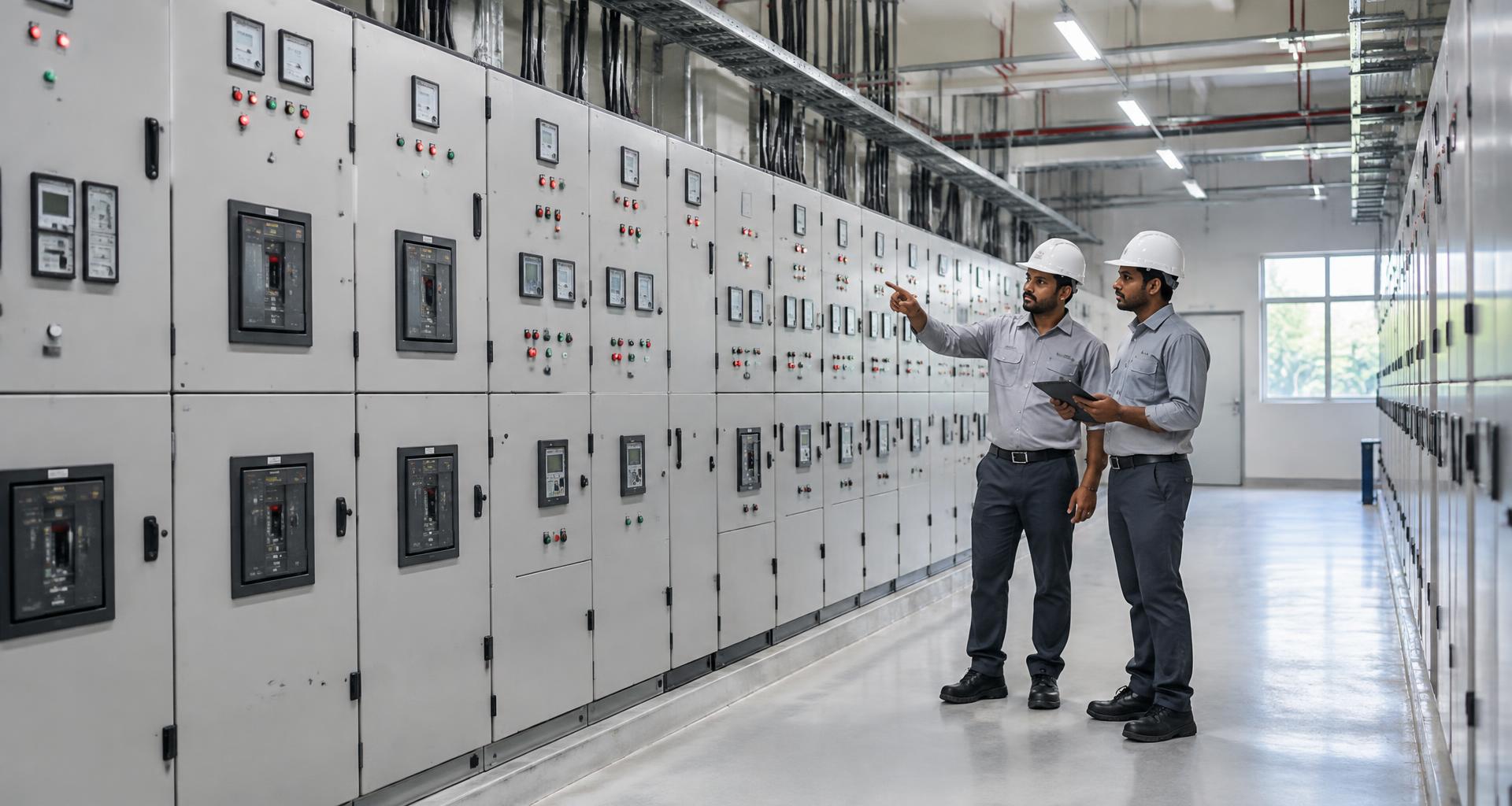
**Step 4: Physical Inspection & Safety Certificate Issuance**: A designated Electrical Inspector conducts an exhaustive on-site audit verifying clearance distances, interlocks, danger notice boards, rubber mat ratings, and fire barrier integrity before issuing the formal Safety Approval Certificate.
Common Non-Conformances That Delay Safety Certification
Experienced facility managers know that CEIG inspections frequently uncover physical non-conformances that delay safety certificate issuance. Common inspection snags include:
1. Inadequate safety clearance distances around HT transformers and VCB switchgear (minimum 1.25 meters clear passageway required).
2. Expired or unrated electrical insulating rubber mats (must comply with IS 15652:2006 Class B/C with verified test certificates).
3. Missing or corroded neutral earth disconnection test links in earthing chambers.
4. Improper fire containment: lack of oil soak pits with gravel fill for oil-filled transformers exceeding 2,000 liters of dielectric oil.
5. Uncalibrated protection relays lacking third-party secondary injection test certificates.
Annual Safety Inspections & Ongoing Facility Compliance
CEIG approval is not a one-time event. High-tension commercial installations must undergo mandatory annual safety inspections. Facility management teams must schedule pre-audit maintenance 30 days prior to the inspection anniversary.
This includes updating earth resistance logs, executing oil dielectric tests, verifying fire extinguisher hydrostatic test dates, and ensuring that all on-site operational personnel possess valid Wireman and Electrical Supervisor competency certificates.
Frequently Asked Technical Questions
What is the penalty for operating without a valid CEIG safety certificate?
Operating an HT installation without valid CEIG approval is an offence under the Electricity Act 2003, empowering the inspectorate and BESCOM to issue immediate disconnection notices and levy financial penalties.
How long is a CEIG electrical safety approval valid in Karnataka?
Initial safety approval permits permanent energization. However, commercial high-tension installations must undergo mandatory annual safety inspections and renewals to maintain legal operational status.
Can an unlicensed contractor apply for CEIG inspection on my behalf?
No. The Karnataka Electrical Inspectorate accepts statutory work completion certificates and safety applications only from licensed electrical contractors holding a valid SuperGrade or Class-A license issued by the Karnataka Electrical Licensing Board.
How does JTechno Associates assist with CEIG compliance?
As a licensed SuperGrade Electrical Contractor with 28+ years of engineering experience across Karnataka, JTechno Associates handles the entire CEIG lifecycle: drawing preparation, pre-inspection testing, snag rectification, and liaison to secure prompt safety certification.
Engineering standards and operational procedures referenced herein comply with Central Electricity Authority (CEA), CEIG Karnataka, Central Pollution Control Board (CPCB), ASHRAE, and National Building Code (NBC 2016) specifications. Facility assessments by JTechno Associates determine site-specific maintenance scopes for commercial properties across Karnataka.
Ready for zero-surprise uptime?
Start with a conversation. We’ll take it from there.